For clinicians and credentialed helpers · Levels 3 and 4
People arrive ready, with a story already started, and they do not disappear when therapy ends.
Licensed clinicians, and coaches and spiritual guides with a credential who bill by the hour. Four ways in, below: join the CCMMP society as it grows, take the courses for professionals, keep your own pathway to flourishing in the Presence+ app, and move your practice to Mindspirit, the practice-management system with Regular Outcomes in every session.

01
Join the CCMMP society mailing list as it grows.
The Catholic Christian Meta-Model of the Person is the shared account of the person behind every level of STEP. The society gathers the clinicians, scholars and formators building on it: articles, case studies, the research program at Divine Mercy University, and the conversations between them. Membership is free to start.
The latest from the CCMMP

CCMMP · Sep 2, 2026
Bringing Divine Mercy to the Catholic University of America
Father Charles Sikorsky announced on August 12th that Divine Mercy University will move to the Catholic University of America campus in the summer of 2027. The relocation centers on O'Boyle Hall, currently home to Catholic University's school of psychology, which is now under renovation. The move builds on an existing clinical partnership between the two institutions.
Read on ccmmp.com
CCMMP · Sep 1, 2026
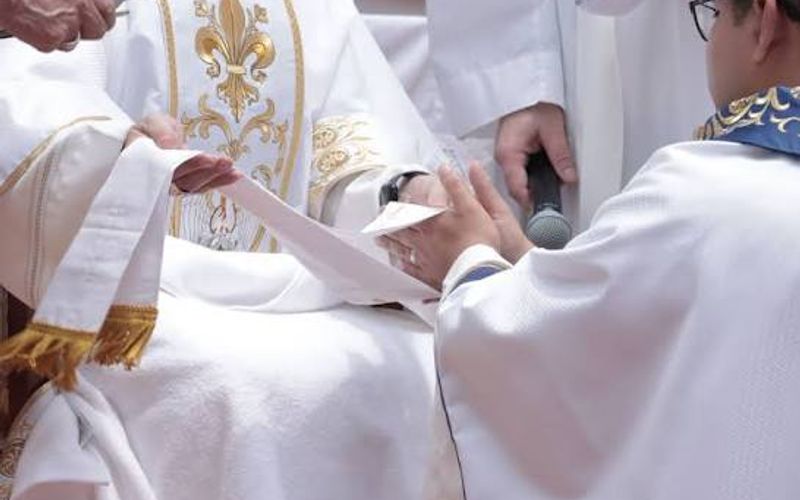
When Bishops and Formation Teams Disagree: An Incoherence at the Heart of Seminary Discernment
A McGrath Institute report finds that 22% of U.S. bishops would ordain men with deeply rooted homosexual tendencies, a rate far above that of seminary rectors, formation directors, and vocation directors. The gap is not merely statistical — it reveals a broken chain of accountability in priestly formation that the 2005 Vatican Instruction was designed to prevent.
Read on ccmmp.com
CCMMP · Aug 25, 2026
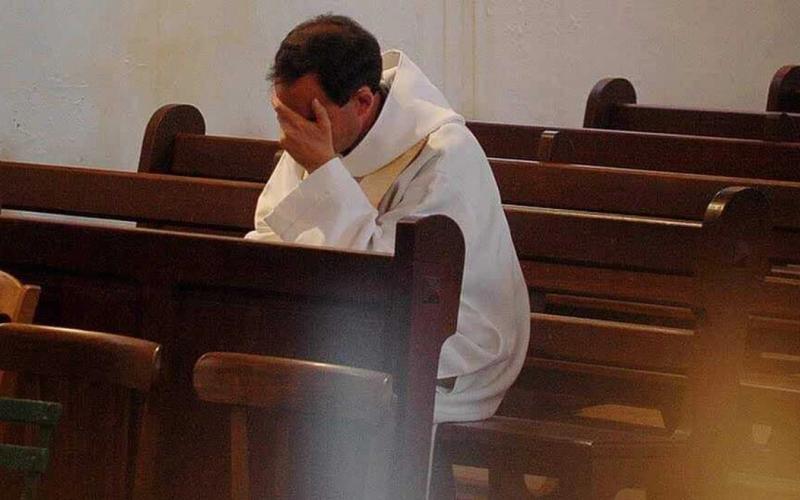
What Child Centered Play Therapy Can Teach a Priest (and an Adult in General)
Child-Centered Play Therapy identifies a basic human need: every person requires at least one place where they can bring anger, sadness, and frustration and still be accepted. A priest whose prayer life and fraternal bonds cannot fill that role faces a structural crisis, not merely a personal failing — one that drives unmet needs toward unhealthy outlets.
Read on ccmmp.com

CCMMP · Aug 24, 2026
When Parents Became the Theologians: Hamburg, Rome, and the Lay Defense of Catholic Anthropology
A parents' network in Hamburg documented 20 contradictions between their diocese's sex-education framework and Vatican teaching, sent the analysis to Rome, and received a formal response. The episode reframes who does the work of defending orthodoxy — and what that means for Catholic education today.
Read on ccmmp.com
02
Take our courses for professionals.
Short courses from Divine Mercy University faculty: assessment through the Model, scope, discernment, group work, sex differences, aging, the dignity beneath the diagnosis. CE credit where it is shown on the course. Enroll with a free MindSpirit account and the course opens on Emmaus.

Two Diagnoses, One Person: Treating Co-occurring Disorders
Two diagnoses. One person. One hour.
Most clients don’t arrive with one clean diagnosis. Dr. Kathie Erwin, a licensed counselor who has practiced and taught for nearly twenty years, walks you through what actually happens when two diagnoses live in one person: how to use the DSM-5 to aim, why trauma and culture and a client’s spiritual strengths belong in the plan from day one, and how a whole-person approach turns five separate problem lists into one coherent plan.
1 hr · 1 lesson · Intermediate
With Dr. Kathie Erwin, Ed. D

Treating the Whole Person — How the Catholic Christian Meta-Model Transforms Clinical Care
Clinical training gives you partial lenses: one for the inner life, another for behavior, the family, the brain. Each is true, but none is the whole person.
1 hr · 1 lesson · Intermediate
With Dr. William Nordling

The Dignity Beneath the Diagnosis: Understanding Clients Through the Catholic Christian Meta-Model of the Person
Every counselor carries a picture of the human person into the room, whether they name it or not. In one hour, this faith-integrated course helps you make it explicit and whole — so you can see a client’s dignity beneath the diagnosis.
1 hr · 1 lesson · Intermediate
With Craig Steven Titus, S.T.D., Ph.D. and Harvey Payne, Psy.D.

Steady Presence: Calm, Limits, and Connection in Child-Centered Play Therapy
The Two Mistakes Every Beginning Play Therapist Makes — and How to Avoid Them
Grounded in the child-centered play therapy tradition and in a Catholic Christian understanding of the child as a free, relational person made for growth, this course gives you something you can carry into the very next session.
1 hr · 1 lesson · Intermediate
With Harvey Payne, Psy.D. and Dr. William Nordling
What we have built
For clinicians and credentialed helpers, we have built 103 courses.
the largest part of the catalog: short, NBCC-eligible courses from Divine Mercy University faculty that bring the Catholic Christian Meta-Model of the Person into clinical work without asking you to leave your training behind. They begin with the Model itself, the eleven premises, the dignity beneath the diagnosis, and what changes in treatment when the client is a whole person. From there they go where the work is: assessment that reads the person and not just the profile, telling a dark night from a diagnosis, trauma treatment with and without words, co-occurring disorders, eating disorders and anxiety beyond symptom management. There are courses on group therapy and the therapist's own formed self, on couples and the multigenerational family, on children in play therapy, and on the science of sex differences. Ethics is treated as anthropology rather than compliance: why ethics depends on a true account of the person, and the three sources of morality in practice. Finally there is a set about you, the clinician, on compassion fatigue, servant leadership and the use of self, and on practicing the virtues you ask clients to practice.
By topic
Courses for professionals, sorted by the work.
Assessment first, then trauma and disorders, group work, the Model itself, and ethics and scope.
The Model of the Person
Treating the Whole Person — How the Catholic Christian Meta-Model Transforms Clinical Care
Clinical training gives you partial lenses: one for the inner life, another for behavior, the family, the brain. Each is true, but none is the whole person.
1 hr · 1 lesson · Intermediate
With Dr. William Nordling
The Dignity Beneath the Diagnosis: Understanding Clients Through the Catholic Christian Meta-Model of the Person
Every counselor carries a picture of the human person into the room, whether they name it or not. In one hour, this faith-integrated course helps you make it explicit and whole — so you can see a client’s dignity beneath the diagnosis.
1 hr · 1 lesson · Intermediate
With Craig Steven Titus, S.T.D., Ph.D. and Harvey Payne, Psy.D.

Seeing the Whole Person: The Eleven Premises of the Catholic Christian Meta-Model of the Person
A clinician's framework for assessing the whole person, for clients of any faith.
Most assessment models see one dimension of a person at a time. The Catholic Christian Meta-Model sees the whole. In this lesson, Drs. Craig Titus and William Nordling introduce the model's eleven premises and develop the first two: that the person is a body-and-soul unity, and that the person is fulfilled through vocation. Using a real family case, they show how these premises reshape assessment for clients of any faith.
1 hr · 1 lesson · Intermediate
With Craig Steven Titus, S.T.D., Ph.D. and Dr. William Nordling
Assessment and diagnosis
Two Diagnoses, One Person: Treating Co-occurring Disorders
Two diagnoses. One person. One hour.
Most clients don’t arrive with one clean diagnosis. Dr. Kathie Erwin, a licensed counselor who has practiced and taught for nearly twenty years, walks you through what actually happens when two diagnoses live in one person: how to use the DSM-5 to aim, why trauma and culture and a client’s spiritual strengths belong in the plan from day one, and how a whole-person approach turns five separate problem lists into one coherent plan.
1 hr · 1 lesson · Intermediate
With Dr. Kathie Erwin, Ed. D

When the Spiritual Looks Clinical: Assessing Extraordinary Religious Experience
A client tells you something outside them has taken hold. The language is religious, the fear is real, and it fits no category you were trained to name. In this course a working exorcist shows how he answers that moment, and it starts the way any careful evaluation should: sit down, listen, and rule out mental illness before considering anything else. You will learn to reason from base rates, to honor a client’s spiritual worldview while running a rigorous differential, and to recognize the point where consulting clergy or referring is the competent move.
1 hr · 1 lesson · Intermediate
With Fr. Jose Antonio Fortea and Fr. John Bartunek, LC

The Test Is Not an X-Ray: Reading the Person, Not Just the Profile
Give personality-assessment feedback that reads the person, not just the profile.
Reading the person, not just the profile — a Catholic-Christian approach to personality assessment feedback
1 hr · 1 lesson · Intermediate
With Harvey Payne, Psy.D.
Trauma and disorders

Beneath the Symptom: A Catholic Christian Approach to Eating Disorders
The eating disorder is rarely on the intake form — and it’s often the most dangerous thing in the room. Learn to see it.
Eating disorders are more common than counselors think and easy to miss. Dr. Fredericka Vyvlecka teaches you to recognize anorexia, bulimia, and binge eating disorder, read the red flags, and assess the whole person behind the symptom. Grounded in DMU’s Catholic Christian Meta-Model of the Person.
1 hr 15 min · 1 lesson · Beginner
With Dr. Fredericka Vyvlecka

More Than the Wound: A Catholic Christian Approach to Treating Trauma
Trauma does real damage. It does not get the last word. In this one-hour lesson, Divine Mercy University faculty apply the Catholic Christian Meta-Model of the Person to trauma care — showing how to treat the wound without reducing the person to it.
1 hr · 1 lesson · Intermediate
With Craig Steven Titus, S.T.D., Ph.D. and Harvey Payne, Psy.D.

What Your Child Isn't Saying: Recognizing Childhood Anxiety, Bullying, and Digital Risk — A Clinical and Catholic Formation Course
Recognizing Childhood Anxiety, Bullying, and Digital Risk — A Clinical and Catholic Formation Course
Ian Masson, LPC, NCC, RPT, Director of the IPS Center at Divine Mercy University, presents clinical warning signs of childhood anxiety across developmental stages — including bullying, digital safety risks, and the role of family relationship and faith community as protective factors.
45 min · 1 lesson · Beginner
With Ian Masson
Group work

Goals That Move the Group: Setting Direction Across Group Therapy Models
How direction actually emerges in process and psychoeducational groups.
Goals matter in every group, but they are not set the same way in every group. In this conversation, Prof. Gabriel Dy-Liacco shows Dr. Harvey Payne how direction emerges in a psychodynamic process group — through honest expression, linking, and shared themes — and how that differs from the direct goal-setting of a psychoeducational group. You will leave able to read a group’s design and set direction accordingly.
1 hr · 1 lesson · Intermediate
With Dr. Gabriel S. Dy-Liacco and Harvey Payne, Psy.D.

Your Personal Journey Matters: The Formed Self as an Instrument of Healing in Group Therapy
You were taught to keep your own story out of the room. Dr. Scrofani spent fifty years proving the opposite. In this one-hour course, he traces his path from a Little Italy tenement to a career of more than 120 therapy groups, and shows why he came to believe that the curative factors of group therapy are, at heart, the classical virtues. Grounded in Divine Mercy University's Catholic Christian Meta-Model of the Person, you will see how your own history, character, and faith are not the background to your clinical work but the instrument of it.
1 hr · 1 lesson · Intermediate
With Philip Scrofani, Ph.D., ABPP

The Whole Person in the Group — Facilitation Through the Catholic Christian Meta-Model
What changes in a group when you see the whole person.
A group is more than a room where people work on their problems. In this panel, Dr. Harvey Payne, William Nordling, Gabriel Dy-Liacco, and Su Li Lee show how the Catholic Christian Meta-Model reframes group work as the formation of the whole person — through vocation, virtue, self-giving, and shared suffering — and what it asks of the leader who bears the group’s burden.
55 min · 1 lesson · Intermediate
With Harvey Payne, Psy.D., Dr. Su Li Lee, Dr. Gabriel S. Dy-Liacco and Dr. William Nordling
Marriage and couples
Intimacy, conflict, repair, and preparing for marriage.

Guarding the Gift: Pornography, Gender Differences, and the Restoration of Marital Intimacy
A Catholic Clinical and Pastoral Perspective
What drives pornography use — really? This 1-hour NBCC CE course brings together clinical psychologists and spiritual directors to examine the emotional and relational roots of pornography use, with close attention to how those roots look different in men and women. Grounded in Catholic anthropology and current clinical practice, Guarding the Gift gives counselors and pastoral ministers a framework for accompanying individuals and couples with compassion, precision, and hope.
1 hr · 1 lesson · Advanced
With Harvey Payne, Psy.D., Lisa Klewicki, MAT, Ph.D., Julia Hogan, LCPC and Dr. John Hopkins

Beautiful and Holy — Preparing Couples for the Wedding Night
Accompanying the Body, Heart, and Soul Toward Self-Giving Love
Help couples prepare for a wedding night — and a whole married life — that is genuinely beautiful and holy, without freezing when the intimate questions come.
1 hr · 1 lesson · Intermediate
With Lisa Klewicki, MAT, Ph.D. and Dr. John Hopkins
Guarding the Gift: Pornography, Gender Differences, and the Restoration of Marital Intimacy
What drives pornography use — really? This course brings together clinical psychologists and spiritual directors to examine the emotional and relational roots.
1 hr · 1 lesson · Advanced
With Harvey Payne, Psy.D., Lisa Klewicki, MAT, Ph.D., Julia Hogan, LCPC and Dr. John Hopkins
Children and parents
Anxiety, grief, screens, and the long game of being present.
What Your Child Isn't Saying: Recognizing Childhood Anxiety, Bullying, and Digital Risk — A Clinical and Catholic Formation Course
Clinical Indicators of Childhood Anxiety, Bullying, and Digital Risk — through a Catholic anthropological lens
45 min · 1 lesson · Beginner
With Ian Masson

The Elephant in the Living Room — Counseling the Multigenerational Family
When adult children and aging parents share a home, family roles can become strained. Dr. Kathie Erwin shows how to address unspoken tensions, renegotiate roles, protect the couple’s bond, and honor older adults through Divine Mercy University’s whole-person psychology and Christian principles.
1 hr 15 min · 1 lesson · Intermediate
With Dr. Kathie Erwin, Ed. D and Fr. Charles Sikorsky, LC, J.D., J.C.L.

When Children Grieve: Helping Kids and Families Through the Death of a Loved One
Whether you sit with grieving families professionally or you are simply the adult a child turns to, this course gives you what to say and what to do.
When someone dies, children take in far more than the adults around them realize, and they grieve in ways that look nothing like adult grief.
1 hr 30 min · 1 lesson · Intermediate
With Paula Darcy and Khris Ford
Identity, sexuality and the body
Same-sex attraction, gender, body image, being a man or a woman.

More Than a Mirror: Accompanying Women Beyond Body Image
A Catholic-Christian, whole-person framework for clinicians and pastoral caregivers — with Divine Mercy University faculty.
A Divine Mercy University faculty roundtable on why body image presses so differently on women — and how the Catholic Christian Meta-Model of the Person helps you treat the whole person, not the symptom.
1 hr · 1 lesson · Intermediate
With Harvey Payne, Psy.D.

Made Male and Female: Gender, Development, and the Catholic Vision of Human Wholeness
A one-hour continuing education course in Human Growth and Development. Drawing on the IPS Anthropology Project, the Catholic Christian Meta-Model of the Person (CCMMP), and the developmental research of scholars including Paul Vitz, this course explores the distinction between biological sex and the development of gendered personality, the role of peer belonging and family structure in sexual identity formation, and a pastoral and clinical framework for accompanying individuals presenting questions of sexual identity.
1 hr · 1 lesson · Advanced

Male and Female, Body and Soul: The Science of Sex Differences for Clinicians
What the body knows about men and women
Sex differences are real, measurable, and clinically relevant. Explore the biology, brain, and complementarity of man and woman through a Catholic view of the whole person, and learn to accompany clients with science, clarity, and respect.
55 min · 1 lesson · Intermediate
With Harvey Payne, Psy.D.
Ethics and scope

Free to Become: How Our Choices Shape the Soul
Every choice is quietly building someone. This course helps you meet them.
For Catholic adults who sense that their daily choices matter but have never been shown exactly how, Free to Become turns St. Thomas Aquinas' account of the moral and spiritual life into one clear, personal hour. Unlike a rules-and-sins approach to morality, it explains the inner mechanics of a free act and the growth those acts produce, and it does so with enough rigor that counselors and pastoral workers can earn continuing education from the same material.
1 hr · 1 lesson · Beginner
With Fr. John Bartunek, LC

When Good Intentions Aren’t Enough: The Three Sources of Morality for Helping Professionals
This one-lesson course provides a Catholic framework to distinguish moral acts from well-intended mistakes using three sources: object, intention, and circumstances. Grounded in Veritatis Splendor and Aquinas, it helps professionals judge actions clearly while honoring human dignity.
1 hr · 1 lesson · Intermediate
With Craig Steven Titus, S.T.D., Ph.D.
Free to Become: How Our Choices Shape the Soul
Guided by St. Thomas Aquinas, learn to tell the object of an act from its intention and its circumstances, and the hard, freeing line between judging an action and judging a person.
1 hr · 1 lesson · Beginner
With Fr. John Bartunek, LC
Leadership and the use of self

The First Person You Lead: Self-Awareness, Servant Leadership, and the Use of Self in the Helping Professions
The best leaders are not the ones with the most impressive résumé. They are the ones who can see themselves clearly.
1 hr · 1 lesson · Intermediate
With Fr. Charles Sikorsky, LC, J.D., J.C.L. and Dr. Tammy Tenaglia

Failure Is Not an Option: Leadership, Decision-Making & Virtue Under Pressure
Leadership is what your character does when control runs out.
An asynchronous, six-lesson formation course that uses six scenes from the film Apollo 13 (1995) — set beside the real April 1970 mission — as a case study in how good decisions get made and good character is revealed when everything is on the line.
3 hrs · 8 lessons · Beginner

More Than Qualified: Women in Leadership through the Lens of Catholic Psychology
Have you ever been invited into a leadership role and wondered: Why me? I'm not qualified for this. You are not alone — and you are almost certainly wrong. In this 15-minute interview-based lesson, Dr. Tammy Tenaglia, Ph.D., shares what she discovered when she joined a Catholic foundation board surrounded by corporate executives: her distinctiveness was the point. Her psychological expertise was exactly what the room needed. Drawing on Catholic anthropology, the science of impostor syndrome, and the spiritual practice of daily self-examination, this lesson equips Catholic women to step into leadership from a place of clarity, confidence, and conviction.
45 min · 1 lesson · Beginner
With Dr. Tammy Tenaglia
03
Maintain your own pathway to flourishing.
Clinicians burn out at rates the profession does not like to say aloud. In Presence+ everyone is both: you have a pathway of your own in the Presence+ app, and the feedback runs both ways. The person rates the session and you see it; supervision with consent, deliberate practice in Melete and formation in the Model are there for you as much as for a Companion.
What a pathway holds
- ✓Your own Regular Outcomes over time, the same measures you run for clients
- ✓The courses you have taken and the next ones for your work
- ✓Practices you keep, and the people walking with you
- ✓A spiritual director or peer, if you choose one, inside the same record
04
Migrate your practice to Mindspirit.
Practice management and an EHR built for the network: scheduling, notes, billing, and the ORS and SRS inside every session under license from Better Outcomes Now. Referrals arrive warm from communities that stay involved, and when your work is done the person steps down to someone who already knows them. Mindspirit is run by Mindspirit LLC and is the only part of the suite that charges a subscription.
Warm referrals
A coordinator has verified the need and the person has already said how they are doing. You see the measures before the first session, with consent.
Measures you would run anyway
The ORS and SRS collected in the session, not as a reporting add-on. Feedback nearly doubles improvement for people who are not on track.
A step down that exists
When therapy ends, the person returns to a Companion, a listener, a group or a pastor. Nobody is discharged into nothing.
Moving from another system? Tell us what you use and we will show you how notes, clients and billing come across. Talk with us.
Founding Therapist Program · limited time
Help build the suite you will practice in.
Therapists who give an hour of feedback a month on the Presence+ suite receive a monthly stipend, hourly pay for special projects, three years of Mindspirit free, and eligibility for equity in Mindspirit.
Join the network
Tell us your license or credential and where you practice. We will show you how referrals and measures work and what the communities near you need.